Follow us on Google News (click on ☆)
Researchers have just formally identified a previously unknown species, which they have named Psilocybe ochraceocentrata, yet collected from the grasslands of South Africa and Zimbabwe. Its name evokes the ochre-yellow color at the center of its cap.
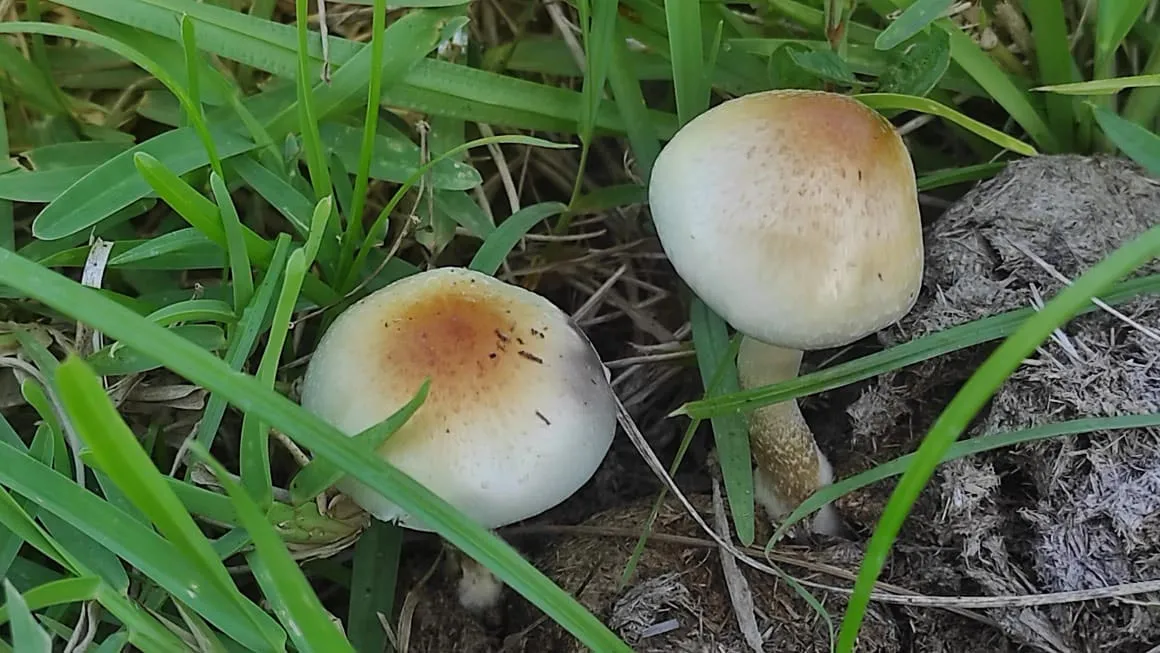
Psilocybe ochraceocentrata grows on cattle dung in the grasslands of southern Africa.
Credit: Talan Moult
Genetic analyses place this species and the already known Psilocybe cubensis as close relatives, sharing a common ancestor dating back approximately 1.5 million years, and not as the same species. This data calls into question the hypothesis of the mushroom being introduced to the Americas via cattle only a few centuries ago.
Despite similar appearances, the two species show genetic, ecological, and chemical differences.
The team used advanced techniques such as phylogenetic analysis and ecological niche modeling. They examined DNA from recent samples and older reference collections. These methods allowed them to reconstruct an evolutionary lineage and estimate the time of separation between the two species.
More than a million years ago, environmental changes likely favored the separate evolution of the two fungi. The study presents a scenario where ecological opportunities led to this divergence over a very long period.
Interestingly, P. ochraceocentrata has been cultivated worldwide for years under the names "NSS" or "Transkei". It is favored by growers and consumers for its ease of cultivation and pronounced effects. The publication in Proceedings B of the Royal Society grants it full species status, clarifying a persistent confusion even among scientists.
This discovery also shows that African fungal diversity is still largely unknown. The first specimens of this species were reported in Zimbabwe as early as 2013, without a formal identification following. This situation suggests other possible revelations about the evolutionary history of fungi in this part of the globe.