On July 16, 2024, a fireball crossed the daytime sky of the New York area. The object entered the atmosphere at about 14 km/s. Its explosion produced a sonic boom heard in the urban area. Fragments then reached neighboring New Jersey.
One of them, weighing 1.35 kg, went through the roof of a house in Hillsborough before falling into a bedroom, but fortunately no one was injured. The impact scattered dust and a sulfurous odor. This spectacular episode offered scientists a particularly valuable sample, recovered almost immediately after its fall.
The owners handled the fragments with gloves, then wrapped them in aluminum foil. They then placed them in glass jars. These precautions greatly limited contamination from the terrestrial environment. They therefore allow a safer study of the molecules that already belonged to the meteorite.
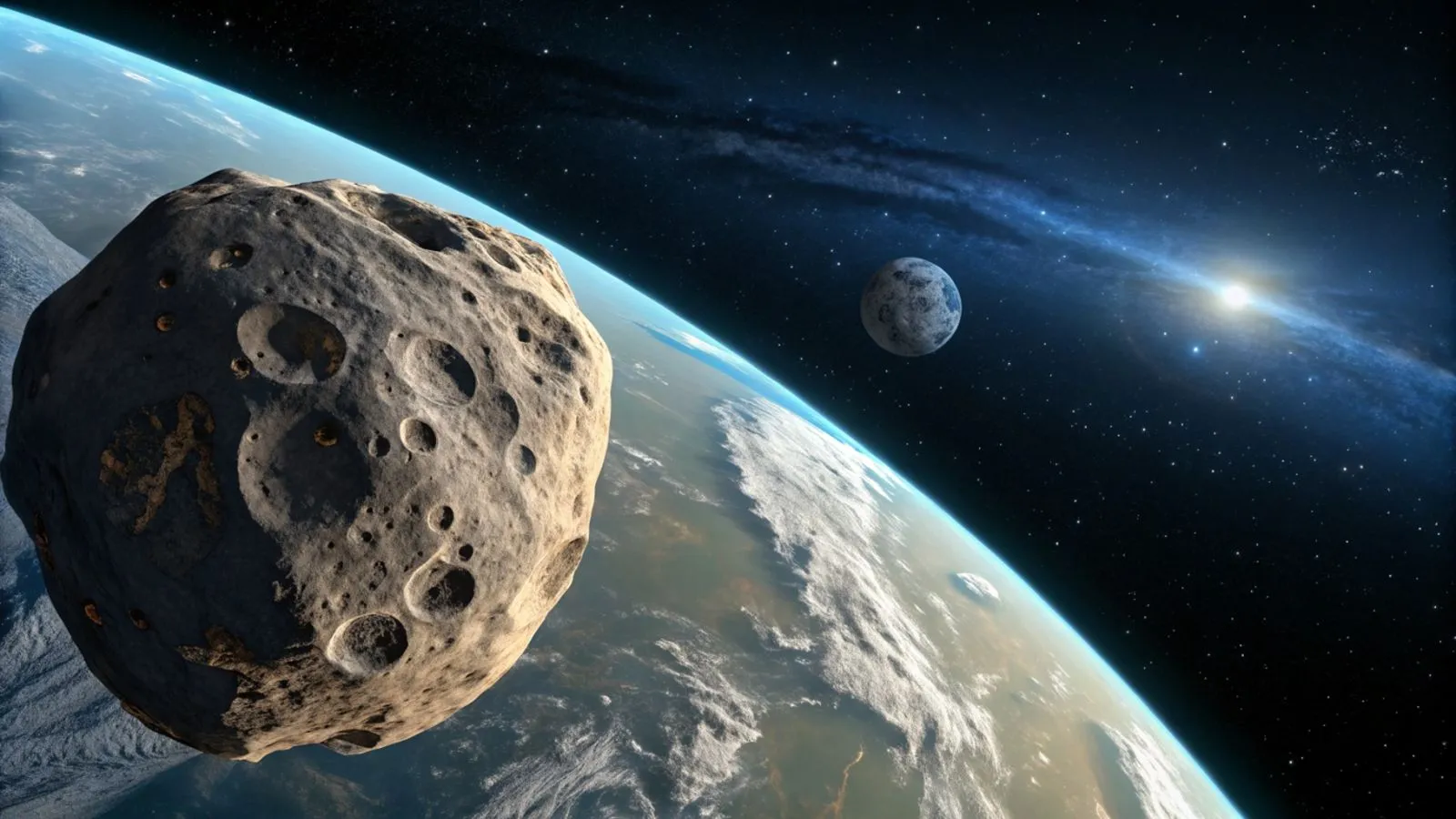
The analyzes indicate that this rock belongs to the CM-type carbonaceous chondrites. These meteorites are considered little-transformed remnants of the beginnings of the Solar System. They would come from asteroids formed beyond the orbit of Jupiter. Their composition is of direct interest to researchers studying the origin of Earth's water.
The meteorite contains organic matter and several types of amino acids rare on Earth. Amino acids are the molecules used in particular to build proteins in living beings. This presence does not constitute proof of extraterrestrial life, but it does show that this chemistry can develop on small celestial bodies.
The rock is also enriched in sodium compared to comparable meteorites. This feature suggests that salty water once circulated inside its parent asteroid. In this environment, water and salts would have favored complex chemical reactions.
The asteroid that gave rise to the meteorite would therefore have possessed an environment temporarily favorable to organic chemistry. Scientists believe that similar bodies may have delivered water and carbon molecules to the early Earth.
The value of this sample also lies in its freshness. Many meteorites remain exposed to rain, soils and microorganisms for a long time before their discovery. Their initial composition then becomes more difficult to reconstruct.